


The Process of Embroidery Lace Manufacturing
2026-04-09
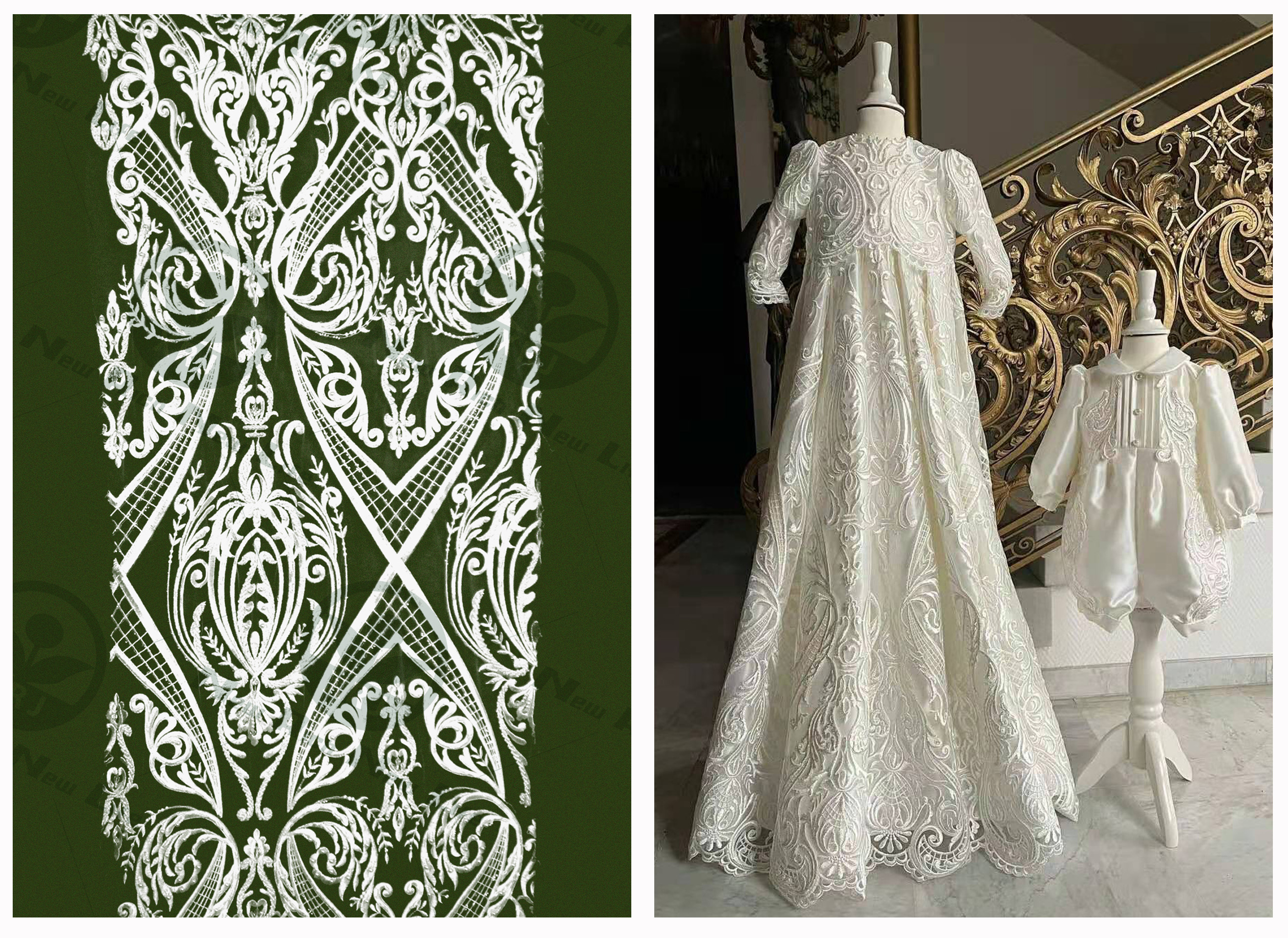
The Process of Embroidery Lace Manufacturing: From Thread to Masterpiece
Ever wondered how the intricate lace on a wedding gown comes to life? Understanding the process of embroidery lace manufacturing helps designers appreciate the craftsmanship behind every yard.
Step 1: Design & Digitizing
It all starts with a motif sketch. Skilled artisans transfer the pattern into a digital file that guides the embroidery machine. This step determines the final look—from floral curves to scalloped edges.
Step 2: Thread Selection
High-quality lace uses premium threads like rayon, polyester, or cotton. For bridal lace (like the gown shown above), soft rayon or matte polyester creates a delicate, luxurious feel.
Step 3: Machine Embroidery
Using Schiffli or multi-head embroidery machines, needles stitch the pattern onto a temporary backing fabric. Thousands of stitches per minute build the raised texture that defines embroidery lace.
Step 4: Chemical Cutting (for Chemical Lace)
For chemical lace, the backing fabric is dissolved in a chemical bath, leaving only the stitched motif. This creates the signature "floating" effect seen on many wedding dresses.
Step 5: Dyeing & Finishing
The raw lace is cleaned, dyed, and heat-set to ensure colorfastness and stability. Finally, scalloped edges are trimmed to create ready-to-use yardage.
Pro Tip:
Still curious about the process of embroidery lace manufacturing? Order swatch cards to examine the stitch density and backing up close—quality reveals itself in the details.
Still curious about the process of embroidery lace manufacturing? Order swatch cards to examine the stitch density and backing up close—quality reveals itself in the details.
Discover more exquisite lace fabrics on our official website or contact us directly. We are ready to cooperate with you and elevate your brand with timeless elegance.
NEWRICH LACE
Previous News: How to Choose the Right Lace for Your Garment
Next News: Cotton Lace vs Nylon Lace: Which is Better?

NEWS - October 22, 2026
Elegant Lace Trim for Wedding Dresses: Romantic Details and Premium Fashion Finishes
Inspired by soft blush-pink tones, dimensional floral decorations, and delicate beaded details, lace trim can be combined with embroidered mesh, tulle, organza, and other lightweight fabrics to create romantic and sophisticated designs.
It is a versatile decorative material for bridalwear brands, garment manufacturers, fashion designers, and wholesale fabric buyers seeking distinctive lace details for their collections.
It is a versatile decorative material for bridalwear brands, garment manufacturers, fashion designers, and wholesale fabric buyers seeking distinctive lace details for their collections.

NEWS - October 16, 2026
Elegant Embroidered Lace Trim – Floral Details and Scalloped Edges for Sophisticated Fashion
This elegant embroidered lace trim features a soft ivory-white color, a sheer mesh base, delicate floral embroidery, and beautifully scalloped edges. The combination creates a refined, romantic appearance with rich visual texture and intricate detailing.

NEWS - October 08, 2026
Premium Embroidered Lace Fabric for Wedding Dresses and Haute Couture
Lace is more than a decorative textile. It is one of the most important materials for creating elegance, romance and refined details in modern bridal and evening wear.
As shown in the image, the wedding dress combines delicate embroidered lace fabric with a lightweight sheer mesh base. Elegant floral and scrolling motifs extend naturally from the fitted bodice to the full skirt, creating a sophisticated combination of texture, dimension and visual depth.
As shown in the image, the wedding dress combines delicate embroidered lace fabric with a lightweight sheer mesh base. Elegant floral and scrolling motifs extend naturally from the fitted bodice to the full skirt, creating a sophisticated combination of texture, dimension and visual depth.