


Technological Advancements in Lace Production
French Lace Fabric Production: Combining Exquisite Craftsmanship with Modern Technology
French lace fabric, with its unique patterns and elegant appearance, has long been favored by the fashion industry and textile sector. With technological advancements, the production process of French lace fabric has undergone significant changes. In modern production lines, we can see the perfect fusion of machinery and craftsmanship. Today, we will take you on a deep dive into the production process of French lace fabric, revealing the technology and innovation behind this classic fabric.
1. Origins of French Lace Fabric
The history of French lace dates back to the 17th century in France, where it became a symbol of noble clothing and fine dresses. Today, French lace plays a significant role not only in the fashion industry but also in lingerie, home textiles, and high-end bespoke garments. With the continuous advancement of technology, traditional hand-made lace is gradually being replaced by machine production, yet it still retains its delicate and exquisite characteristics.
2. Modern French Lace Production Process
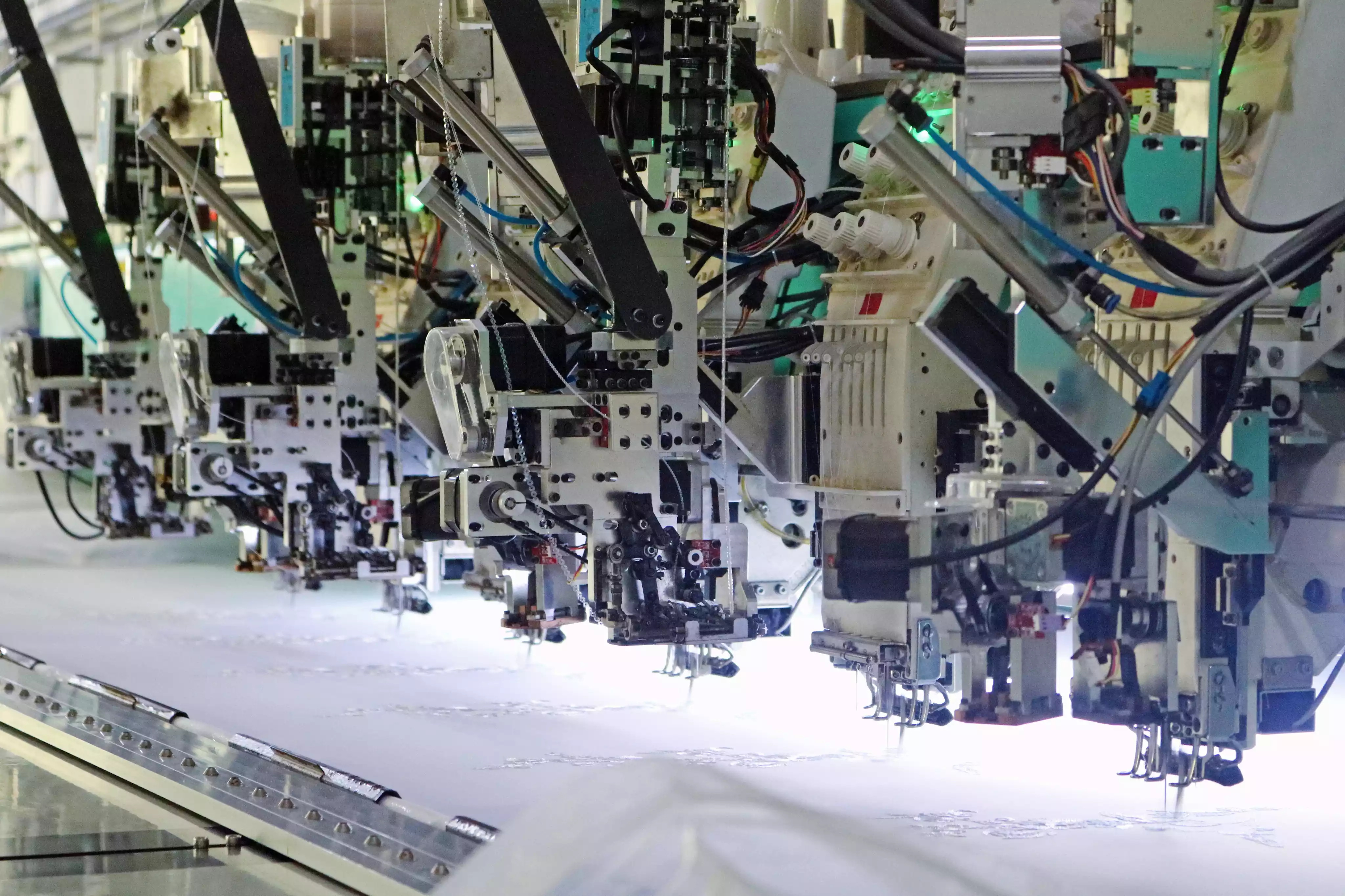
The modern production of French lace relies on advanced automated equipment. These machines precisely control each step of the process to ensure the accurate representation of lace patterns. The production line in the image demonstrates cutting-edge machinery, which uses high-precision embroidery and stitching techniques to perfectly replicate the beautiful patterns of traditional lace.
2.1 Automated Embroidery Equipment
Automated embroidery equipment is one of the key technologies in the production process of modern French lace. Through precise mechanical operations, embroidery machines can stitch intricate patterns on fabric, patterns that might take hours or even days to complete by hand. The introduction of automation significantly improves production efficiency while maintaining a high level of delicacy.
2.2 High-Precision Stitching Technology
In addition to embroidery, the production of French lace also relies on high-precision stitching technology. Modern sewing equipment can precisely control every stitch to ensure perfect alignment of the patterns. This high-precision technology is crucial for rapidly producing French lace fabric while meeting large-scale order demands.
3. Sustainability and Innovation: The Future of Green Production
As environmental awareness grows, more and more French lace manufacturers are adopting sustainable materials and production processes. Using eco-friendly dyes, reducing energy consumption, and optimizing the recycling systems in production lines are some of the key innovations in the production of French lace. These changes not only enhance production efficiency but also meet the growing consumer demand for environmentally friendly products.
4. Why Choose French Lace Fabric?
French lace holds a significant place in the global fashion industry due to its unique design and elegant appearance. It not only adds luxury and refinement to clothing but also enhances the value and exclusivity of the products. Whether in high-end bespoke garments, lingerie, or bridal dresses, French lace fabric is an essential element.
5. Conclusion
The production of modern French lace fabric not only preserves the delicacy and uniqueness of traditional craftsmanship but also integrates advanced technologies and sustainable practices. The production process is not just a fusion of craftsmanship and technology but also a symbol of progress. As market demand grows and production technology continues to evolve, the future of French lace fabric holds unlimited possibilities.